Philosophy
Structural shift
Real-world momentum
100-year trajectory
Daily-life impact
Institutional implications
Measured. Grounded. Inevitable.
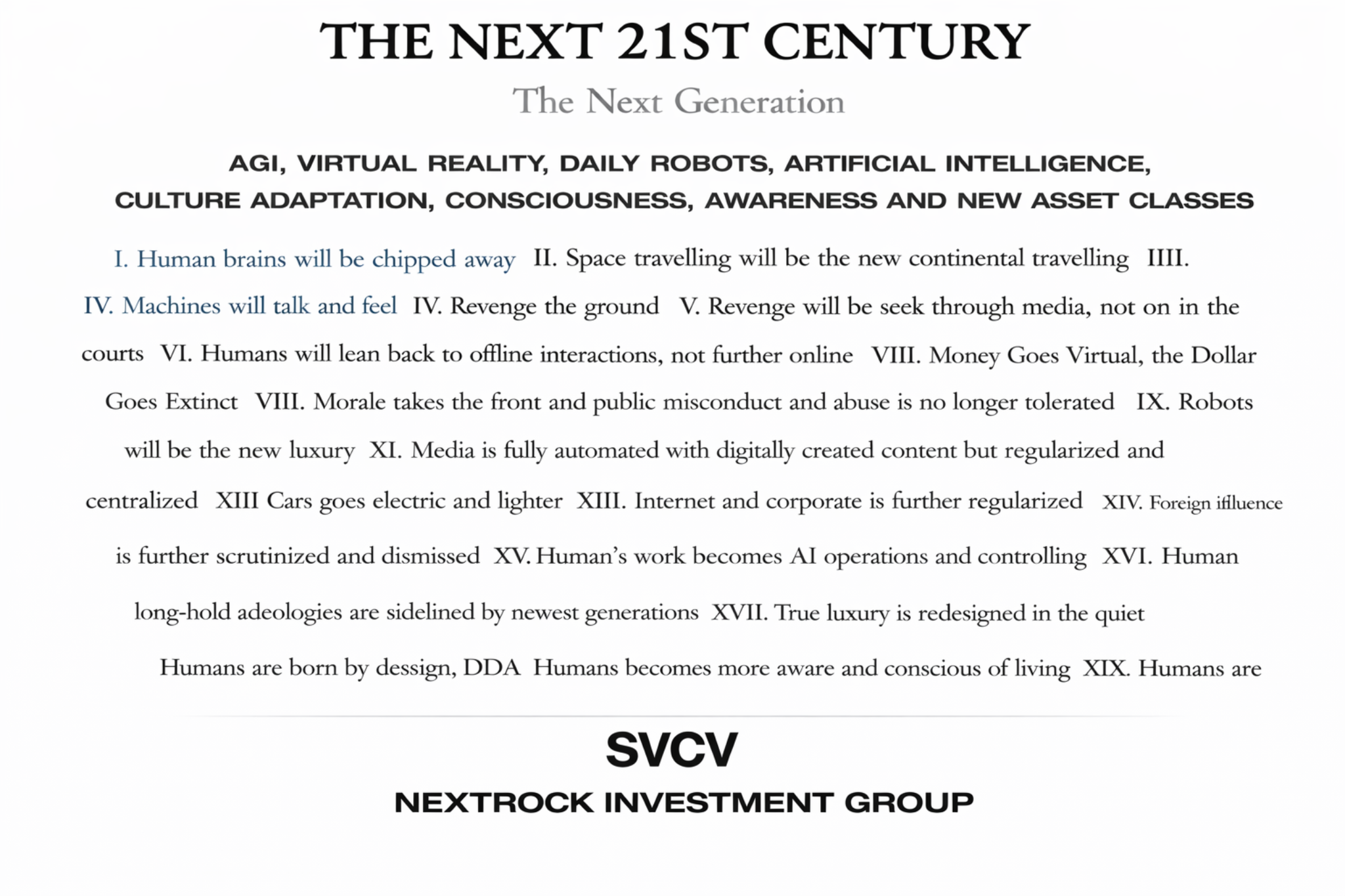
Space Traveling Will Be the New Continental Traveling
I. Philosophy — Geography Is Losing Its Final Boundary
For most of human history, geography defined destiny.
Mountains separated civilizations.
Oceans delayed trade.
Distance meant isolation.
The airplane compressed continents.
The internet compressed communication.
The next compression is physical again.
Space is not a fantasy frontier.
It is the next layer of infrastructure.
Just as crossing the Atlantic once felt unimaginable —
and now is routine —
orbital movement will gradually normalize.
The question is not whether humans leave Earth.
The question is how infrastructure expands beyond it.
II. Structural Shift — Orbit Becomes Economic Territory
Space is already commercial.
Satellites power:
• Global internet
• GPS navigation
• Financial synchronization
• Climate monitoring
• Military intelligence
Without orbital infrastructure, modern civilization stalls.
Space is no longer exploration.
It is utility.
The next step is cost compression.
When cost per kilogram to orbit declines,
space transitions from government-led to commercially scaled.
That is when geography changes again.
III. Real-World Momentum — Companies Already Building the Layer
This shift is already measurable.
SpaceX
• Reusable rockets dramatically lowering launch cost
• Starlink satellite network providing global broadband
• Increasing annual launch cadence
Blue Origin
• Reusable rocket systems
• Long-term orbital infrastructure ambitions
Rocket Lab
• Dedicated small satellite launches
• Private and government payload deployment
NASA & ESA partnerships with private firms
• Public-private mission architecture
• Commercial cargo and crew missions
Private space stations (e.g., Axiom Space)
• Commercial orbital habitation development
The cost curve is moving downward.
Launch frequency is increasing.
Satellite density is expanding.
The infrastructure layer is already in orbit.
IV. The Next 20 Years
Expect:
• Satellite constellations becoming denser
• Commercial lunar missions
• Early orbital tourism normalization
• Defense-driven space security investments
• Increased geopolitical competition in orbit
Daily life impact:
• Faster global connectivity
• Real-time Earth monitoring
• Improved disaster response
• Expanded remote regions connectivity
• More space-dependent logistics systems
Space remains expensive — but less rare.
V. The Next 50 Years
If current trajectories hold:
• Orbital manufacturing emerges (microgravity advantages)
• Lunar infrastructure supports resource extraction
• Space-based energy experiments scale
• Interplanetary cargo becomes technically feasible
Travel beyond Earth becomes less symbolic and more functional.
Not mass tourism.
But strategic movement.
Daily life may include:
• Space-origin materials in consumer goods
• Energy systems partially sourced from orbital platforms
• Seamless global connectivity independent of terrestrial networks
Geography becomes less Earth-bound.
VI. The Next 100 Years
Within a century:
• Space travel could mirror early aviation cycles
• Orbital transit hubs may function like early airports
• Interplanetary research stations may operate continuously
• Certain industries may relocate partially off-world
Space will not replace Earth.
It will extend it.
Continental travel once reshaped trade, culture, and politics.
Orbital travel may reshape sovereignty.
VII. Institutional Implications
Space expansion affects:
• Telecommunications
• Defense and security
• Energy infrastructure
• Supply chains
• National strategy
Investments may span:
• Launch systems
• Satellite infrastructure
• Space cybersecurity
• Orbital logistics
• Advanced materials
The next century’s infrastructure map will include orbit.
Institutions ignoring this layer will operate with incomplete geography.
The Principle
Space will not be conquered in one leap.
It will be normalized gradually.
Just as oceans became shipping lanes.
Just as air became transit.
The next century will extend civilization upward.
Geography will no longer end at the atmosphere.