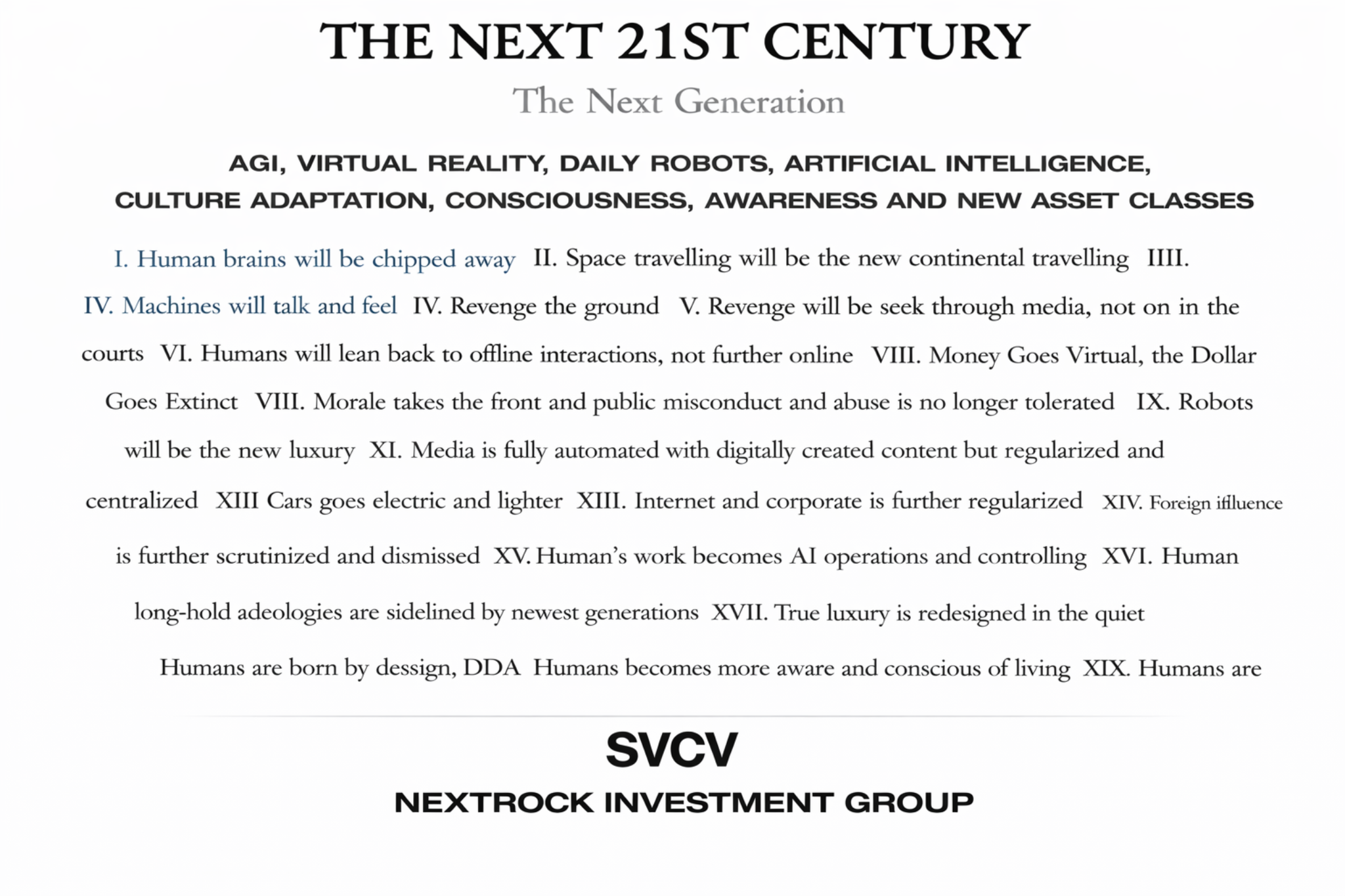
I. Philosophy — Speed Disrupts Doctrine
For most of history, ideologies endured for decades, sometimes centuries.
Political systems stabilized.
Religious interpretations evolved slowly.
Economic models defined eras.
Ideologies were inherited.
They were transmitted across generations with minimal friction.
The 21st century introduced velocity.
Information flows instantly.
Contradictions are exposed quickly.
Historical narratives are searchable.
Alternative perspectives are always available.
When knowledge accelerates, rigidity weakens.
The newest generations grow up in fluid environments.
They do not anchor identity to single frameworks as strongly as their predecessors.
Doctrine becomes negotiable.
II. Structural Shift — From Fixed Alignment to Adaptive Identity
Younger generations experience:
• Cross-cultural exposure from childhood
• Algorithmic content feeds
• Real-time global discourse
• Access to competing worldviews
As a result:
• Loyalty to rigid institutions declines
• Political identities fragment
• Economic expectations shift
• Work values prioritize autonomy
• Social structures become more flexible
This does not eliminate belief.
It decentralizes it.
Identity becomes modular rather than monolithic.
III. Real-World Momentum — Already Visible
Several observable trends reflect this shift:
Political Fluidity
• Increased independent voter identification in many democracies
• Lower trust in traditional political institutions
• Rapid shifts in issue-based alignment
Religious and Institutional Decline
• Declining membership in traditional religious institutions in several developed nations
• Growth of individualized spiritual practices
Work Culture Transformation
• Younger generations prioritizing flexibility over stability
• Increased entrepreneurship and digital-native business creation
• Remote-first workforce preferences
Media Consumption
• Decentralized news consumption
• Influence of independent creators over traditional outlets
Ideological loyalty weakens.
Issue-based engagement strengthens.
IV. The Next 20 Years
Expect:
• Continued erosion of rigid institutional alignment
• Faster political and cultural shifts
• Greater generational tension
• Increased demand for transparency and authenticity
• Growth in decentralized communities
Daily life impact:
• Career mobility becomes normal
• Political affiliation becomes less fixed
• Identity becomes more self-defined
• Institutional trust becomes conditional
Younger generations may prioritize:
• Practical outcomes
• Technological integration
• Ethical transparency
• Global interconnectedness
Over inherited dogma.
V. The Next 50 Years
As generational turnover continues:
• Leadership demographics shift
• Corporate governance reflects newer value systems
• AI and technology policy shaped by digitally native leaders
• Ideological frameworks become more pragmatic and less doctrinal
Institutions may evolve from ideology-driven to performance-driven.
Success metrics replace rhetoric.
VI. The Next 100 Years
Within a century:
• Many 20th-century ideological structures may appear outdated
• Governance models may hybridize
• Cultural identity may become more fluid
• AI-driven knowledge systems may continuously challenge rigid belief structures
The dominant ideology of the next century may not be a single doctrine.
It may be adaptability.
The ability to evolve faster than conditions change.
VII. Institutional Implications
This generational shift affects:
• Political systems
• Corporate branding
• Workforce management
• Education systems
• Media strategy
Opportunities include:
• Adaptive governance models
• Issue-based investment strategies
• Flexible organizational structures
• Value-aligned brand positioning
• Technology-integrated civic systems
Institutions that cling to rigid doctrine risk alienation.
Institutions that evolve gain resilience.
The Principle
The next century will not eliminate belief.
It will accelerate adaptation.
Long-held ideologies will not vanish overnight.
But they will be questioned continuously.
The newest generations will not inherit systems unchanged.
They will redesign them.
And flexibility will become the dominant survival trait.