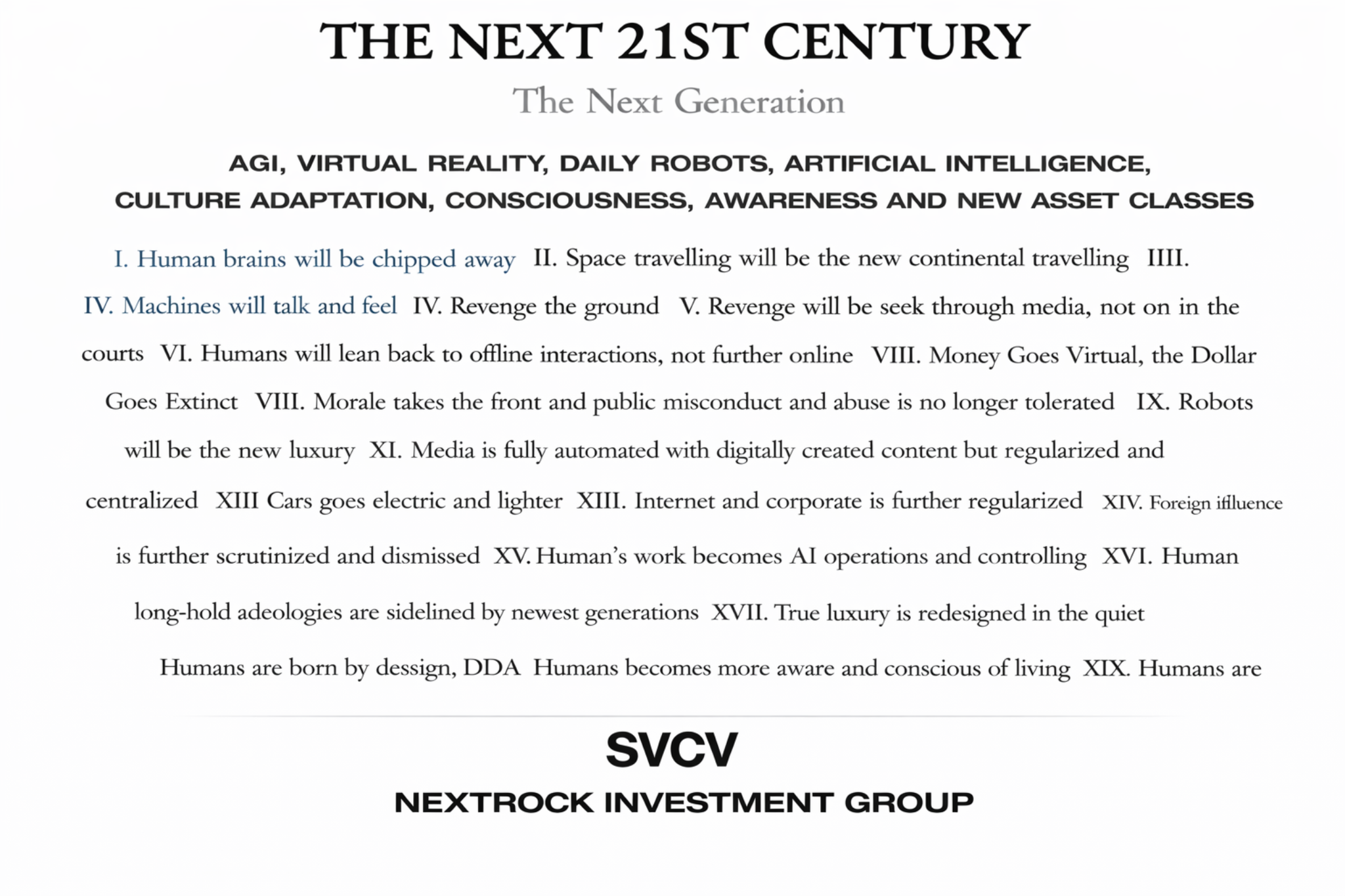
I. Philosophy — Narrative Becomes Synthetic
For centuries, media required human effort.
Writers wrote.
Editors curated.
Studios produced.
Journalists investigated.
Media was constrained by time and labor.
The AI era removes those constraints.
Text can be generated instantly.
Images can be synthesized.
Video can be fabricated.
Voices can be replicated.
Creation scales infinitely.
But when creation becomes infinite, curation becomes critical.
The next century will not reduce media.
It will multiply it beyond manual control.
Narrative becomes synthetic.
II. Structural Shift — From Human-Limited to Algorithmic Production
Automation introduces three transformations:
Infinite content generation
Hyper-personalized distribution
Centralized infrastructure control
When AI can produce:
• News drafts
• Film scripts
• Marketing campaigns
• Music compositions
• Influencer avatars
Media transitions from production-constrained to attention-constrained.
The bottleneck becomes trust and regulation.
If content can be fabricated at scale, governance becomes essential.
III. Real-World Momentum — Already Visible
This transformation is active today.
Generative AI Systems
OpenAI (text, image, video models)
Generate articles, creative writing, visual media.
Google DeepMind & Gemini
Multimodal generation (text, image, code).
Midjourney & Stability AI
High-quality image generation.
Runway & video-generation startups
AI-generated video production.
Synthetic Influencers
Virtual personalities with millions of followers already operate on major platforms.
AI-Assisted Newsrooms
Major media outlets use AI for:
• Drafting reports
• Data summarization
• Headline generation
• Sports and financial coverage automation
Music & Audio
AI-generated music tools produce commercial-grade soundtracks.
Voice cloning tools replicate human speech patterns convincingly.
Automation is not future tense.
It is operational.
IV. The Next 20 Years
Expect:
• AI-generated films and television
• Fully synthetic news anchors
• Personalized news streams
• Automated marketing ecosystems
• Increased misinformation regulation
Governments will respond with:
• AI labeling requirements
• Digital watermarking standards
• Deepfake legislation
• Platform accountability laws
Daily life impact:
• Personalized content feeds
• Reduced distinction between human and AI-generated media
• More immersive synthetic experiences
• Increased need for verification tools
The public may consume AI media without noticing.
V. The Next 50 Years
If generative systems mature:
• Entire entertainment ecosystems may be AI-produced
• Interactive media personalized in real time
• Narrative engines adapting to individual psychology
• AI directors coordinating complex productions
Simultaneously:
• Fewer platforms dominate distribution
• Regulation centralizes content verification
• Trusted media brands become gatekeepers
Creation decentralizes.
Control recentralizes.
VI. The Next 100 Years
Within a century:
• Most media may be synthetic
• Human creators operate at high-concept oversight levels
• Content becomes dynamically generated in response to viewer behavior
• Global standards regulate authenticity and identity
Media may become:
• Automated
• Personalized
• Interactive
• Algorithmically moderated
The distinction between creator and system may blur.
But central infrastructure will govern distribution.
Trust will concentrate.
VII. Institutional Implications
This shift affects:
• Entertainment industries
• News organizations
• Advertising
• Social platforms
• Regulators
• Intellectual property law
Investment opportunities include:
• Generative AI infrastructure
• Content verification systems
• Digital watermarking technology
• AI media compliance platforms
• IP protection mechanisms
The next century’s media power will belong to:
Those who control infrastructure.
And those who control trust.
The Principle
Media will not disappear.
It will accelerate.
Creation will be automated.
Distribution will consolidate.
Regulation will tighten.
Narrative will become programmable.
And in a world of infinite content, authority will rest not with who creates —
But with who verifies.