I. Philosophy — Saturation Creates Reversal
Every technological expansion produces excess.
Industrialization produced pollution.
Mass media produced propaganda.
Social media produced overexposure.
The early 21st century expanded digital presence to saturation:
• Constant notifications
• Permanent connectivity
• Algorithmic feeds
• Digital identity performance
Human attention became fragmented.
Privacy became scarce.
Time became compressed.
When a system saturates, humans recalibrate.
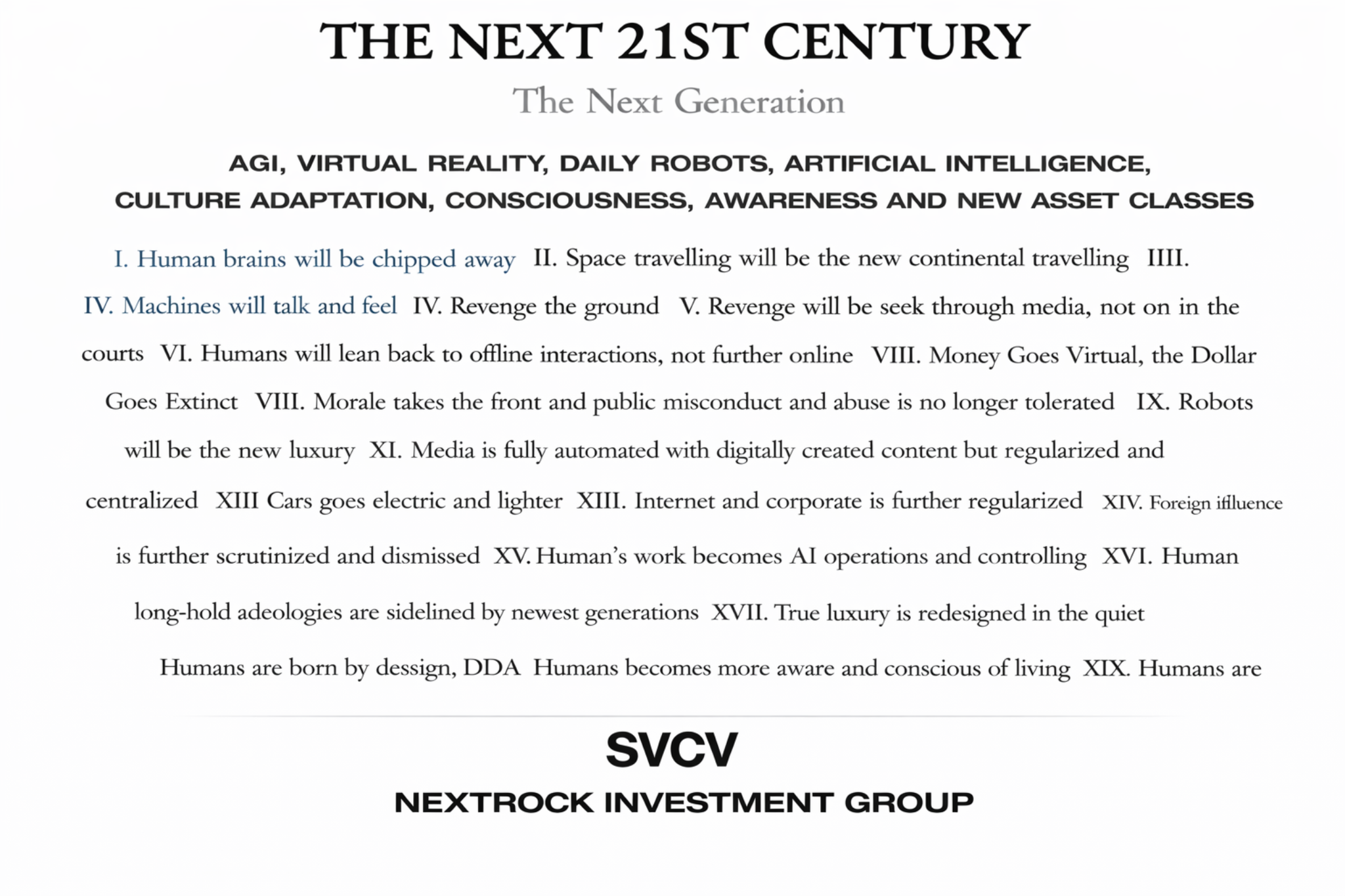
The next century will not be fully online.
It will be hybrid.
Offline becomes intentional.
II. Structural Shift — Scarcity Reverses
In a digital world:
• Information is abundant
• Visibility is constant
• Access is immediate
Scarcity shifts to:
• Silence
• Physical presence
• Undocumented time
• Unrecorded interaction
The more life moves online, the more value migrates to what is not.
Offline becomes premium.
Not because technology fails.
But because humans require boundaries.
III. Real-World Momentum — Already Emerging
This shift is already visible.
• Growth of digital detox retreats
• Screen-time awareness tools embedded in devices
• Private members clubs emphasizing no-phone policies
• Wellness industries centered around disconnection
• Luxury travel emphasizing remoteness and silence
• Increased interest in analog hobbies (vinyl, film photography, print publishing)
Technology firms themselves now offer:
• Focus modes
• App usage tracking
• Do-not-disturb systems
• Digital minimalism design features
The market has identified attention fatigue.
Offline experiences are being monetized.
IV. The Next 20 Years
Expect:
• Premium offline environments in urban centers
• More strict device-free institutional spaces
• Growth in privacy-first real estate
• Increased regulation of addictive digital design
• Cultural prestige shifting toward discretion
Daily life impact:
• Meetings without devices
• Private gatherings shielded from documentation
• Controlled digital exposure
• Social status tied to restraint, not visibility
Visibility becomes optional, not default.
V. The Next 50 Years
As digital infrastructure becomes more immersive (AR/VR, AI companions, neural interfaces):
• Physical presence gains emotional weight
• Offline communities become stronger identity anchors
• Hybrid work stabilizes into balanced models
• Luxury real estate markets emphasize isolation and autonomy
The human nervous system remains biological.
No matter how advanced digital systems become,
humans still require sensory grounding.
Offline becomes neurological hygiene.
VI. The Next 100 Years
Within a century:
• Constant connectivity may be technically seamless
• Neural augmentation may blur online/offline boundaries
• Digital layers may overlay daily perception
Yet human psychology will still demand:
• Quiet
• Nature
• Physical contact
• Undocumented moments
Offline will not disappear.
It will become curated.
True luxury will not be speed.
It will be stillness.
VII. Institutional Implications
This shift affects:
• Real estate development
• Hospitality
• Wellness industries
• Media companies
• Social platform regulation
• Consumer product design
Opportunities may include:
• Privacy-first infrastructure
• Secure communication tools
• Offline premium communities
• Analog product resurgence
• Experience-based luxury markets
The institutions that thrive will not push endless connectivity.
They will design controlled integration.
The Principle
The next century will not be fully virtual.
It will be consciously balanced.
Technology expands.
Humanity recalibrates.
Offline will not be resistance.
It will be refinement.